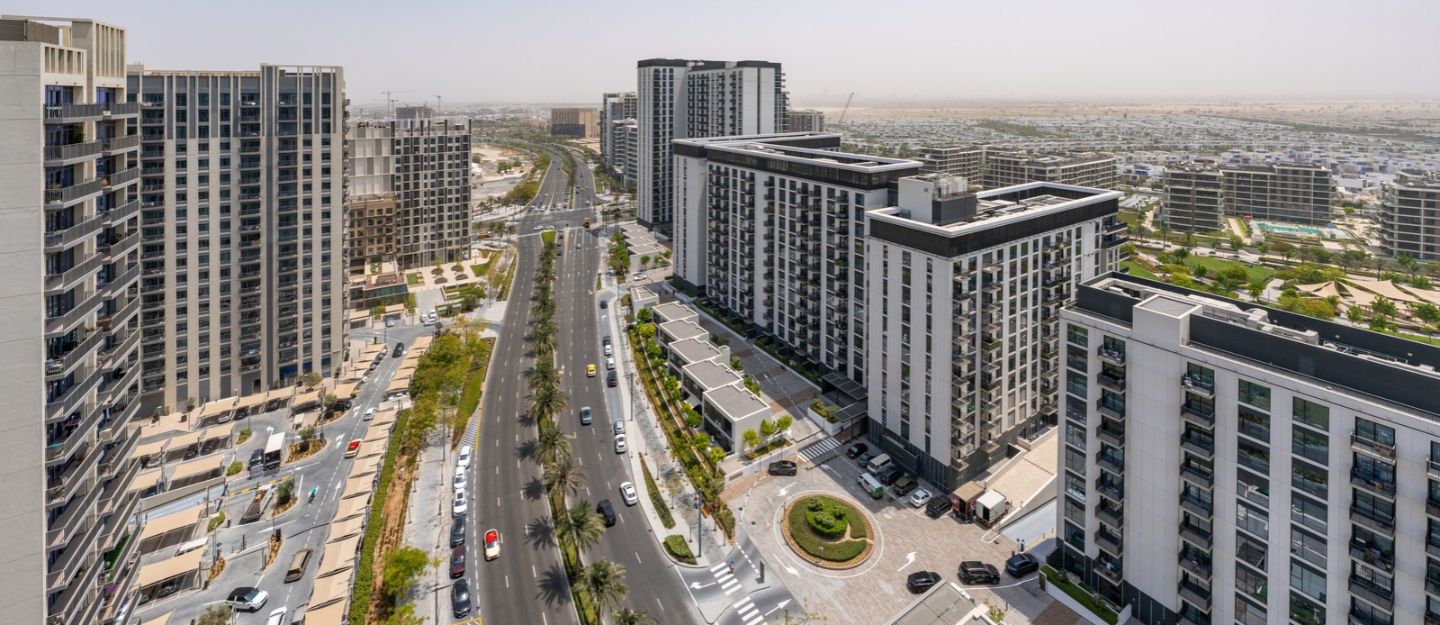
Buying, renting or working in Dubai property means meeting terms like DLD, RERA, Ejari, Oqood and SPA. Here is what each one means.
Real Estate Terms, Organisations and Systems
Dubai Land Department (DLD)
The Dubai Land Department (DLD) is the main governing body for real estate in Dubai. It is responsible for managing, overseeing, and ensuring secure and transparent real estate trading in Dubai. This government-run entity has been given the charge to safeguard the interests of investors, landlords and tenants by providing a proper regulatory framework, dispute resolution system and other relevant customer services.
The Dubai Land Department is also the sole authority for legalising the buying and selling of land and property in Dubai.
Real Estate Regulatory Agency (RERA)
One of DLD’s regulatory wings, the Real Estate Regulatory Agency or RERA, establishes the rules and regulations for the Dubai real estate market.
These regulations include everything from purchasing property and tenancy laws in Dubai to the legalising and registering of various real estate-related contracts through different RERA forms in Dubai.
Rental Disputes Centre (RDC)
Where can you file a complaint against a landlord in Dubai? The answer is the Rental Disputes Centre. Located in the Dubai Land Department building in Deira, the RDC ensures quick and adequate resolution of rental disputes in Dubai and promotes a healthy real estate market for landlords and tenants.
Rental disputes or tenancy law violations that the contracting parties cannot adjudicate on their own are resolved at the RDC, making it an important entry on our list of Dubai real estate terms and definitions.
Makani
The Arabic word Makani translates to “my location.” So Makani is a smart navigation system that identifies every public place, building and house in Dubai using the “Makani number,” a unique 10-digit identification code.
Makani is a geolocation app that allows you to share location details. It also comes with an Emergency Location Reporting feature that sends out distress signals in times of crisis.
Al Sa’fat
Al Sa’fat is another word in the Dubai real estate vocabulary you should be familiar with, especially in the construction business. Also known as the Dubai Green Building System, Al Sa’fat regulates and promotes sustainable developments in Dubai.
Approved in 2016, Al Sa’fat replaced the Dubai Green Building Regulations from 19 October 2020 and sets mandatory requirements for all new buildings in Dubai. This system regulates the consumption of resources and encourages renewable energy.
Trakheesi
Trakheesi is particularly important for aspiring real estate agents. The system grants licences and approvals to brokerage firms and real estate professionals in Dubai.
This smart system is integrated with property listing portals and the Dubai Department of Economy and Tourism (DET), allowing access to multiple databases for permissions, registrations and records.
Property Contracts and Services
There are different local names for the various types of real estate contracts and services in Dubai.
Ejari
If you are a tenant or a landlord renting property, Ejari in Dubai is easily the most common real estate term you’ll come across. Ejari is a standardised way of registering tenancy contracts in Dubai. Register Ejari on the DLD website, the Dubai REST app, Dubai Now or at a Real Estate Services Trustee Centre; online registration costs AED 177.75 including VAT.
Registration will help you access a number of essential services in the city, like getting a new DEWA connection, subscribing to internet and phone services and even sponsoring your dependents.
Oqood
When looking at residential and commercial real estate terms and definitions that specifically apply to off-plan properties, Oqood is the most important one.
Like Ejari, Oqood automates, registers and manages the off-plan property contracts and markets in Dubai. This platform also offers a range of other services to real estate developers to maintain transparency in managing their off-plan projects.
Escrow Account
Under Law No. 8 of 2007, off-plan buyers pay into a project escrow account held by a DLD-approved bank and used only to build that project.
Musataha
Musataha is a real estate contract in Dubai and the UAE that allows you to lease land from owners and construct a property or use it for any other legal purpose for up to 50 years.
Any construction on land obtained under the Musataha operates similar to leasehold ownership. The builders’ right to land and property ends when the lease expires. A lease period refers to the time in which the lease has to be repaid.
Other Important Property Terms
Other basic real estate terms in Dubai that you will encounter in the industry include:
Freehold
Freehold ownership of property in Dubai entitles the buyer to full legal rights until they decide to sell the property to someone else. Properties categorised as freehold are only available in designated areas of Dubai and can be purchased by foreigners looking to invest in real estate.
Leasehold
The leasehold property ownership allows buyers to use and live in the property for a particular time. The usual leasehold term in Dubai is 99 years, which can be extended.
The main difference between freehold and leasehold land is that leasehold property does not transfer full ownership to the buyer.
BUA
BUA, or the built-up area, is the total construction area on the land. In the case of a building or multiple-storey construction, it is the gross floor space.
For example, the construction footprint of a property is 10,000 sq.ft., and the building has four floors. Its BUA would be 40,000 sq.ft.
Saleable Area
The next entry in our guide on Dubai real estate terms is the saleable area. The term refers to the square footage of the gross floor space of the property. The saleable area does not include common or shared spaces like lifts, corridors, foyers and staircases.
SPA
SPA stands for Sales and Purchase Agreement, and it is one of the most common terms in the real estate industry of Dubai. The SPA is a legally binding contract that details the sale terms and conditions between the buyer and seller.
In resale deals, the buyer and seller sign Form F, the mandatory DLD sales contract; for off-plan property, the developer drafts the SPA. Either way, the buyer can negotiate the terms before signing.
Form F (MOU)
Form F is the mandatory DLD sales contract between buyer and seller, required for all Dubai property sales since 1 May 2014.
NOC
A developer No Objection Certificate (NOC) is needed to register a resale in Dubai’s freehold areas; it is requested as an e-NOC through the Dubai REST app.
Power of Attorney (POA)
Power of Attorney or POA allows the legal appointment of a person who can work on behalf of the issuer (of the POA) in case of his or her absence. The appointee can make any decisions and sign legally binding documents. As per law, a POA requires valid notarisation and attestations.
Title Deed
The Dubai Land Department recognises and registers a Title Deed. This document provides proof of ownership and registers a particular property with the emirate’s authorities. To register a sale and issue the title deed, the DLD charges a transfer fee of 4% of the sale value, listed as 2% for the seller and 2% for the buyer.
This brings us to the end of this post on the glossary of real estate terms in Dubai. Whether you’re an investor or someone just looking for your next home, knowing the real estate jargon can make understanding the industry’s processes easier.
Recommended Posts


