What you need to know about the new Dubai Metro Gold Line
- Overview
- Project Announcement
- Route Details
- Integration with Existing Metro Lines
- Construction Technology
- Expected Passenger Capacity
- FAQs
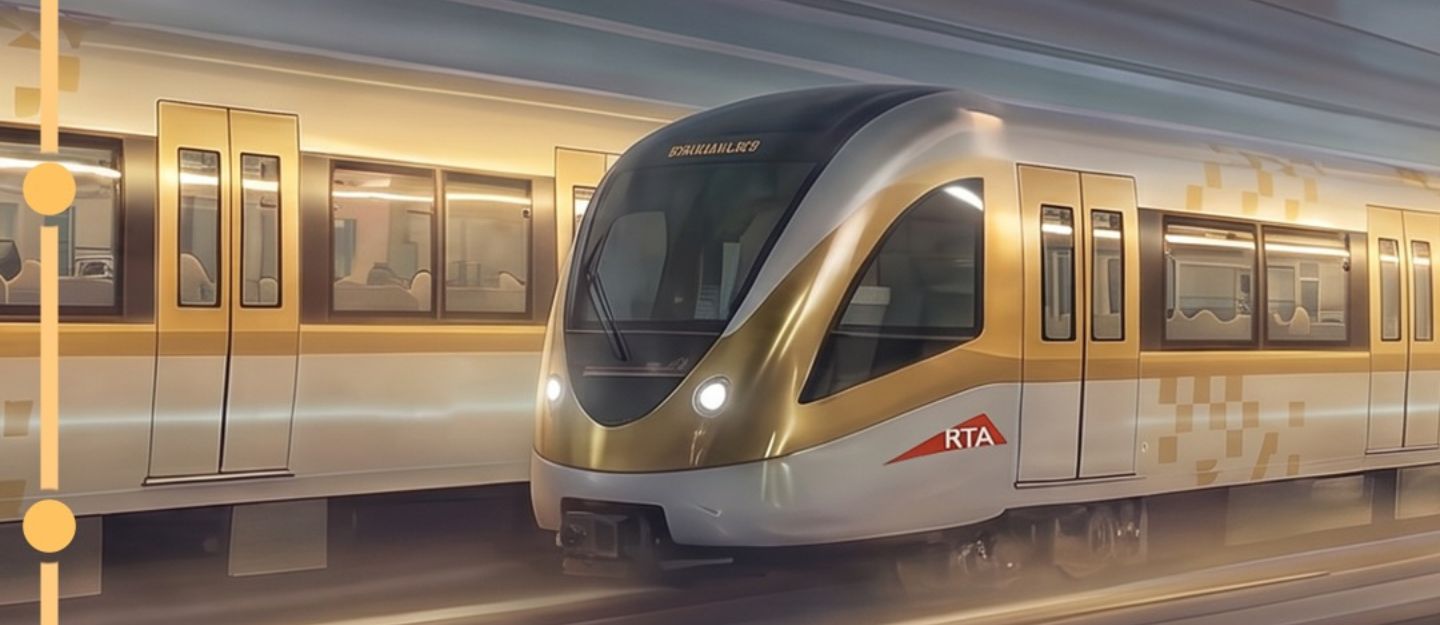
Dubai is preparing for its largest-ever public transport expansion with the launch of the Dubai Metro Gold Line. Announced by His Highness Sheikh Mohammed bin Rashid Al Maktoum, Vice-President and Prime Minister of the UAE and Ruler of Dubai, the AED 34 billion project will extend the Dubai Metro network by around 25% and is scheduled for completion on September 9, 2032.
The 42km Underground Line Will Connect 15 Key Areas
The new Dubai Metro Gold line will be a 42 km-long, fully underground metro system running at a depth of up to 40 metres. Passing through key areas like Nad Al Sheba, Al Ghubaiba, City Walk, Business Bay and Meydan, it will strengthen links between established districts and fast-growing neighbourhoods.
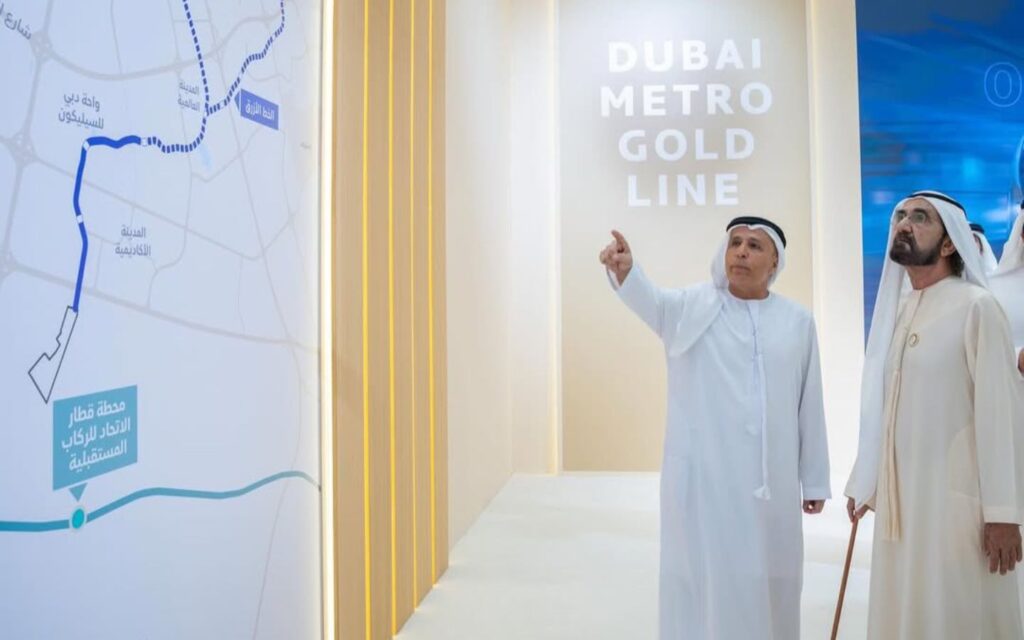
Making the announcement, H.H. Sheikh Mohammed described the New Dubai Metro line as “the largest transportation project in Dubai’s history.”
The new RTA Dubai Metro Gold Line Project is designed to:
- Enhance connectivity across rapidly growing residential and commercial districts
- Support tourism by linking major urban hubs and leisure destinations
- Strengthen investor confidence in Dubai’s long-term infrastructure planning
Expected to serve around 465,000 passengers daily, the Dubai Gold Line Project will be fully operational by 2040. The route will also directly support more than 55 major real estate developments currently under construction.
Gold Line Dubai Route: From the Historic Creek to Emerging Communities
The Gold Line Dubai route will cover Al Ghubaiba, one of Dubai’s most historic waterfront districts and run across the city to Jumeirah Golf Estates.
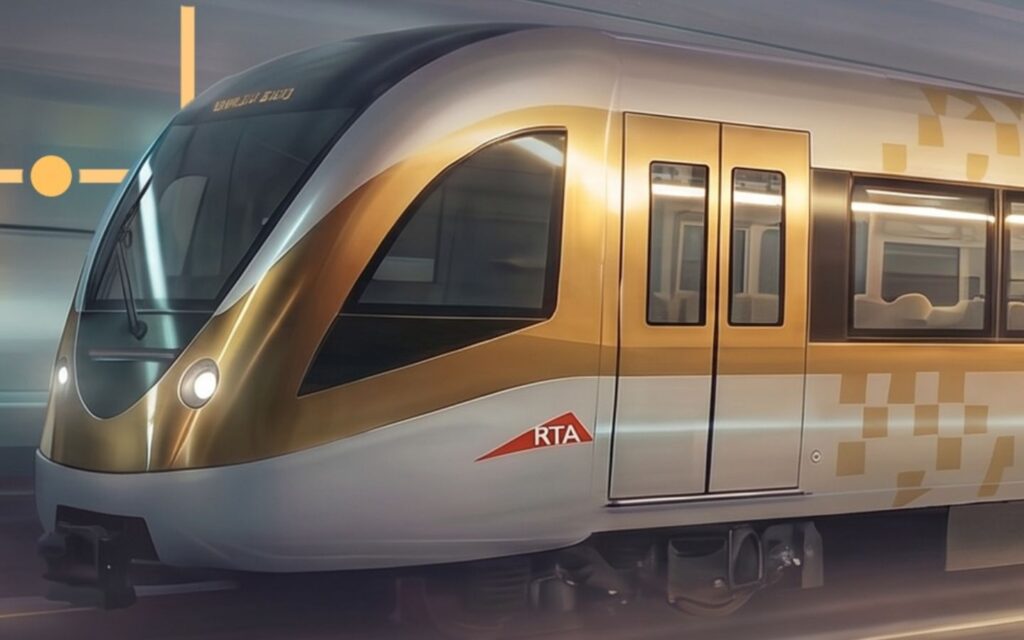
Along the way, it will connect several important areas, including:
- Bur Dubai
- Satwa
- Meydan
- Al Barsha South
- Jumeirah Village Triangle (JVT)
- Dubai Production City
Integration with the Existing Metro and Etihad Rail
The Gold Line will integrate directly with Dubai’s existing metro network, making it easier for residents and visitors to travel across the city without needing a car. It will have three intersections with the current Red and Green Lines, connecting to:
- Business Bay
- Al Ghubaiba
- Jumeirah Golf Estates
Crucially, the Gold Line will also link with the UAE’s national passenger rail network, Etihad Rail, at two stations, further increasing ease of inter-emirate travel for residents, tourists and business travellers alike. Etihad Rail is one of the most innovative transport projects in the UAE.
Advanced Tunnel-Boring Technology and Underground Infrastructure
The new Dubai Metro Gold Line will rely on advanced tunnel-boring technology to construct its deep-level routes.
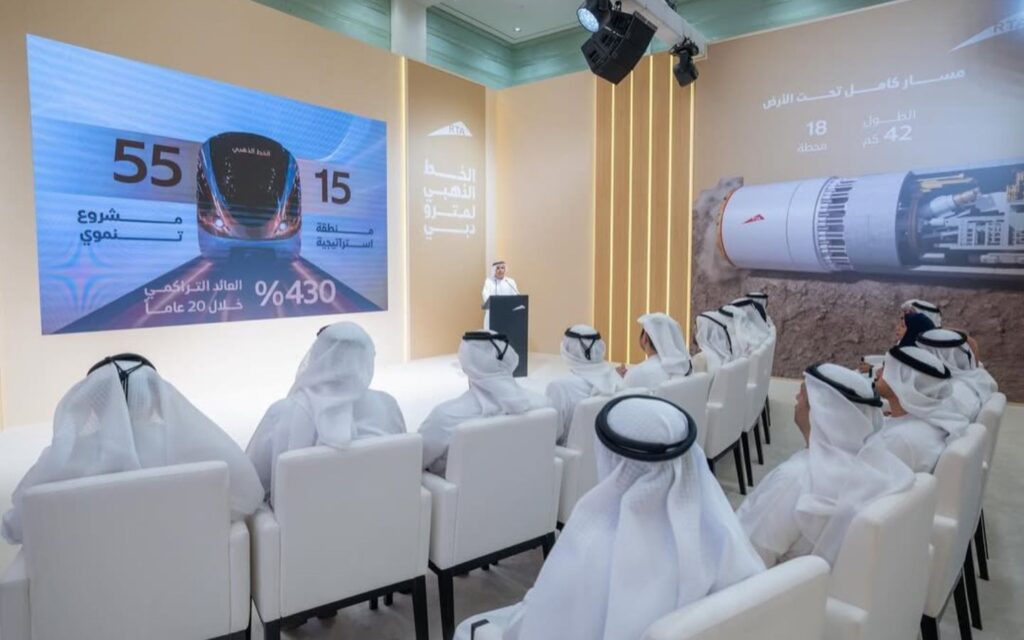
According to the project video, the line will:
- Add an underground track length equivalent to twice the current length of the metro’s existing tunnels
- Significantly expand Dubai’s subsurface transport infrastructure, reducing surface congestion and preserving urban aesthetics
This approach reflects Dubai’s commitment to high-tech, future-focused urban planning that aims to keep the city moving efficiently while minimising disruption at street level.
Looking Ahead: Dubai Loop and High-Speed Mobility
Alongside the Gold Line, Dubai is also planning a high-speed underground transport system known as the Dubai Loop. This concept aims to cut commute times using 12-foot-wide tunnels, reinforcing Dubai’s ambition to be a global leader in innovative, time-saving mobility solutions.
Economic Impact: A 430% Projected Return
Beyond mobility, the new Dubai Metro Golden Line project is expected to generate strong economic value. Projections indicate a cumulative return of up to 430% over 20 years of operation.
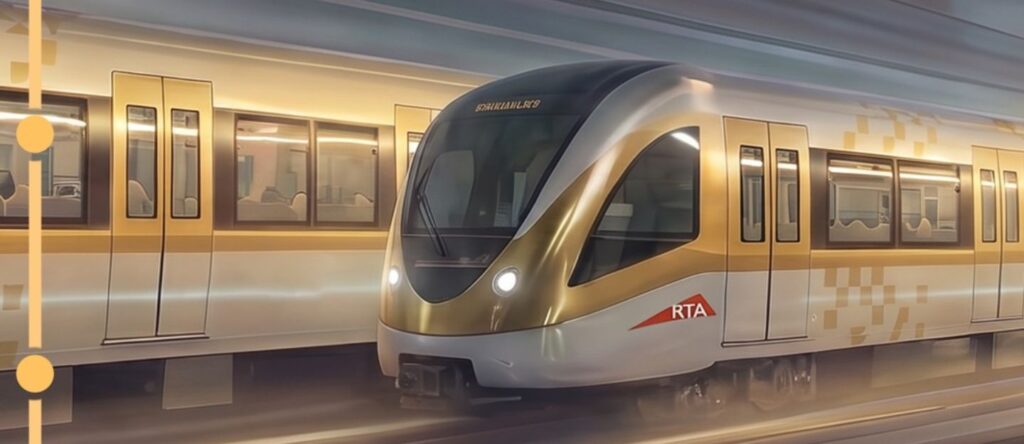
For investors, this signals:
- Confidence in long-term ridership demand
- A strong link between metro accessibility and property value growth
- Continued government focus on transit-oriented development across key districts
The line’s alignment through major residential, commercial and mixed-use areas positions it as a catalyst for new developments and renewed interest in existing communities.
The Link between September 9 and Dubai Metro
For the Dubai Metro, September 9 is more than just a date on the calendar. On 09.09.2009 at 09:09:09 pm, H.H. Sheikh Mohammed officially inaugurated the Dubai Metro. This timing was a symbolic choice, reflecting values of precision, ambition and national pride.
Since then, every new metro line has been inaugurated on September 9, turning the date into an unofficial “Metro Day” for the city.
Dubai Metro Green Line
- Officially opened on September 9, 2011
- Public service began on September 10, 2011
- Length: 23 km
- Connects the historic districts of Deira and Bur Dubai
- Consists of 20 stations:
- 8 underground
- 12 elevated
The Green Line plays a crucial role for both residents and visitors, offering easy access to traditional souqs, museums and historic neighbourhoods.
Dubai Metro Blue Line
The Blue Line is currently under construction and is scheduled to open on September 9, 2029, exactly 20 years after the Red Line’s launch.


Key details include:
- Length: 30 km
- 14 new stations:
- 5 underground
- 9 elevated
- Will connect areas such as Dubai Creek Harbour, Dubai Silicon Oasis and Academic City to the existing metro network.
- Construction is expected to be 30% complete by early 2026.
Together with the Gold Line, the Blue Line will further deepen connectivity to emerging residential, commercial and educational hubs.
Gold Line and Advantages for Tourists
For those visiting Dubai, the New Dubai Metro Gold Line Project will:
- Make it easier to explore historic areas, modern leisure destinations and new communities without relying on taxis or rental cars
- Offer faster, more predictable travel times between hotels, shopping districts, business hubs and attractions
- Enhance access to areas like Meydan, Jumeirah Golf Estates and emerging residential zones that are increasingly featuring on tourist itineraries
As Dubai continues to attract millions of visitors each year, the Gold Line will become a key part of the city’s tourism experience, offering a clean, efficient and air-conditioned way to discover the emirate.
What the Dubai Metro Gold Line Means for Residents
For Dubai residents, the Gold Line represents:
- Shorter commutes and reduced reliance on private cars
- Better access to jobs, schools and services across multiple districts
- Improved connectivity between older neighbourhoods and new master-planned communities
By linking dense residential areas to major employment and lifestyle centres, the Gold Line supports a more sustainable, transit-oriented way of living in Dubai.
What the Gold Line Means for Investors
For local and international investors, the Gold Line is a strong signal of Dubai’s long-term commitment to infrastructure-led growth.
Key takeaways for investors include:
- Properties near existing and future metro stations tend to enjoy higher demand and stronger capital appreciation.
- The line supports more than 55 major real estate projects, many of which will see enhanced appeal thanks to improved accessibility.
- The projected 430% cumulative return over 20 years points to robust ridership and economic integration with the wider city.
FAQs About the Dubai Metro Gold Line
What is the Dubai Metro Gold Line?
The Dubai Metro Gold Line is a new fully underground Dubai Metro line spanning 42km and connecting 15 strategic areas across the emirate. It is the largest transportation project in Dubai’s history and will expand the metro network by around 25%.
When will the Gold Line be completed?
The Gold Line is scheduled for completion on September 9, 2032, in line with Dubai’s tradition of inaugurating metro lines on September 9.
Which areas will the Gold Line serve?
The line will run from Al Ghubaiba to Jumeirah Golf Estates, passing through areas such as Bur Dubai, Satwa, Meydan, Al Barsha South, JVT and Dubai Production City, among others.
Will the Gold Line connect to existing metro lines?
Yes. The Gold Line will intersect with the current Red and Green Lines at three points, including Business Bay, Al Ghubaiba and Jumeirah Golf Estates.
Will it connect to Etihad Rail?
Yes. The Gold Line will connect to the UAE’s Etihad Rail passenger network at two stations, improving inter-emirate connectivity for both residents and visitors.
Is the Gold Line fully underground?
Yes. The Gold Line is designed as a fully underground line, running at depths of up to 40 metres below the city, constructed using tunnel-boring technology.
How many people will the Gold Line serve?
By 2040, the Gold Line is expected to serve around 465,000 passengers daily, supporting approximately 1.5 million residents and numerous visitors.
Why is September 9 important for Dubai Metro projects?
Dubai first launched its metro on 09.09.2009 at 09:09:09pm. Since then, new lines, including the Green Line and the Blue Line and now the planned Gold Line, have been scheduled for inauguration on September 9, making the date symbolic of the city’s transport milestones.
What is the expected economic impact?
The Gold Line is projected to deliver a cumulative return of up to 430 per cent over 20 years of operation, reflecting its importance as both a transport and economic infrastructure project.
The Dubai Metro Gold Line is more than a new expansion towards improving public transport in Dubai. For those who live in the city, visit regularly, or invest in its growth, the Gold Line will play a central role in how Dubai moves, grows and connects over the coming decades.
All images courtesy of RTA Dubai Facebook Page