All about the Fujairah Heritage Village
- Overview
- Historic Arab Lifestyle
- Al Yazrah Irrigation System
- Fujairah Fort
- Traditional Arab Hospitality
- Location
- Timings and Entry Ticket
- FAQs
Nestled against the backdrop of the Hajar Mountains, the Fujairah Heritage Village offers a captivating window into the traditional soul of the United Arab Emirates. This open-air museum allows visitors to step into a world of ancient coastal and mountain life. As one of the region’s most significant cultural landmarks, it showcases the resilience of the Emirati people through its architecture and historical exhibits.
Here is an overview of what to expect on your trip to the Heritage Village in Fujairah.
AN OVERVIEW OF FUJAIRAH HERITAGE VILLAGE
The Fujairah Heritage Village was officially established under the visionary directives of His Highness Sheikh Hamad bin Mohammed Al Sharqi, the Ruler of Fujairah. The primary purpose behind its establishment was to create a permanent living museum to safeguard the unique Emirati identity.
The village is owned and managed by the Fujairah Tourism & Antiquities Department and operates as a government-sanctioned guardian of history, offering visitors an immersive experience of the social and economic foundations that shaped the Emirate of Fujairah.
WHAT’S INSIDE FUJAIRAH HERITAGE VILLAGE?
Beyond the broad strokes of its historical architecture, the Fujairah Heritage Village is home to a collection of hidden treasures. Visitors can venture inside the cool interiors of the stone houses to discover authentic domestic setups, featuring hand-woven Sadu floor mats and antique brass coffee pots.
Here is a closer look at the unique experiences and historical wonders you can explore within the village:
Step Into The Historic Arab Lifestyle
The Fujairah Heritage Village offers unique insight into the history of the Arab region through its artistic displays.
The houses feature the traditional architecture and materials used in the region for centuries. Some of the dwellings are constructed with sturdy sun-dried bricks and mud, while others are built using Arish (woven palm fronds) and date palm stalks. This use of local, organic materials showcases the simplicity of a rural lifestyle and the clever ways early settlers used the desert’s resources to stay cool.

The village also has several rooms showcasing different day-to-day activities practised by the locals. For instance, there are traditional rural grocery shops, barbershops and more that visitors can explore for an understanding of the early local life.
Similarly, visitors can peek into the other routine activities and have a look at the cooking utensils and farming tools that were used by Arab villagers centuries ago. The village also has beautiful handicraft items made by local women. These handicrafts are displayed on the walls of small guestrooms in the village houses.
Discover The Traditional Al Yazrah Irrigation System
Visitors will also come across the irrigation system that was used in Arab farms before the industrial revolution brought forth the use of modern machinery for agriculture. The Al Yazrah irrigation system in Fujairah Heritage Village uses a bull to irrigate the crops. You can have a look at this retro farming practice that once played a major role in the food production cycle.

Explore The Iconic Fujairah Fort
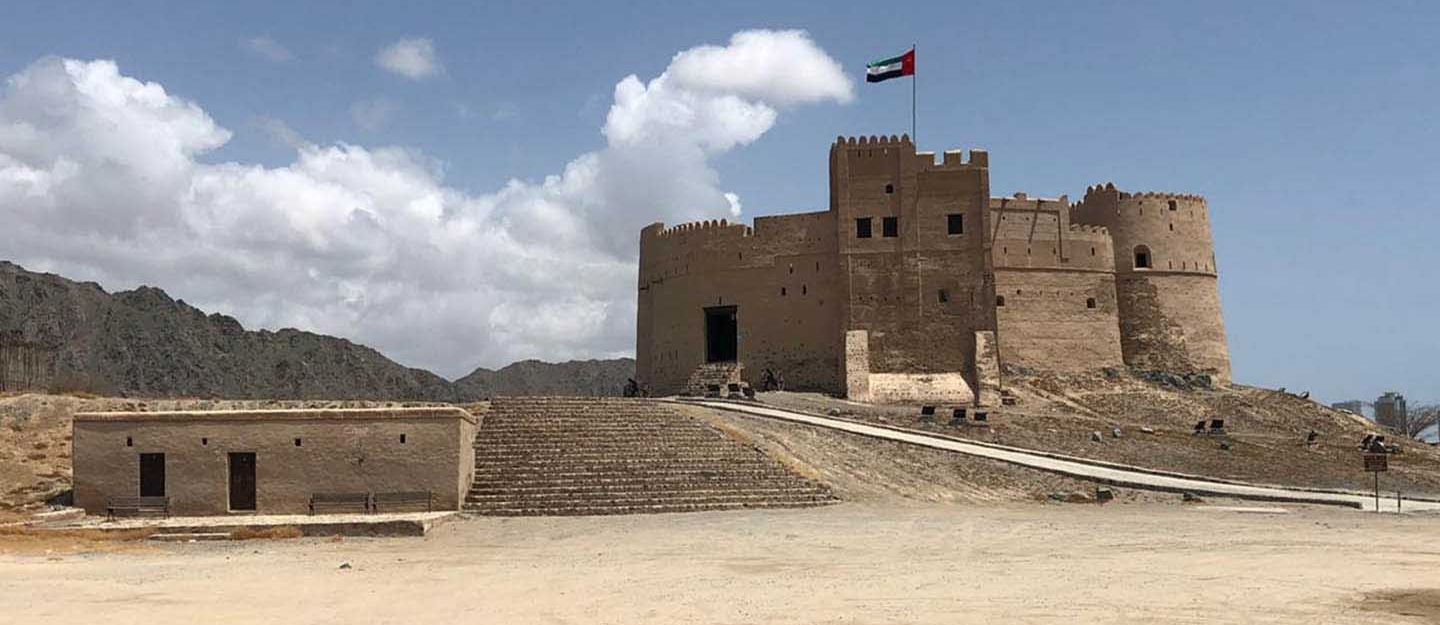
Originally constructed in the 16th century, it is one of the most formidable and historic defensive structures in the UAE. Built from a mixture of mud, gravel and coral stone, the fort served as both a defensive stronghold and the residence of the ruling family for centuries. Its unique design, featuring three circular towers and one square tower, offers a breathtaking view of the surrounding palm groves and mountains.
A Glimpse of Traditional Arab Hospitality
At Fujairah Heritage Village, the locals offer Qahwa (Arabic coffee) to visitors. The coffee is made with crushed cardamom and other spices, giving it a strong aroma and a unique taste. The traditional Qahwa or coffee is served hot in traditional cups and is complemented with dates.
Wander Through a Traditional Souq Experience
No visit to the village is complete without a stop at the traditional souq, a marketplace that recreates the bustling atmosphere of ancient trade. The souq offers a sensory experience where you can purchase authentic local products, including mountain-harvested honey, premium dates and hand-painted pottery. It is the perfect place to pick up a meaningful souvenir while supporting local craftsmanship and experiencing the bartering culture.


Capture Stunning Moments
The village is widely considered one of the most photogenic locations in the UAE. The striking contrast between the earthy, sun-baked mud-brick walls and the jagged, violet-hued peaks of the Hajar Mountains creates a stunning backdrop for photography enthusiasts.
Whether you are capturing the intricate textures of the Arish huts or the panoramic views from the watchtowers, the golden hour light here provides a dramatic and timeless quality.
Strategic Location And Accessibility
The village is conveniently situated in the northwest of Fujairah City, nestled near the lush Madhab Spring Park and the Madhab Palace. For those looking to maximise their cultural itinerary, the site is within easy walking distance of the Fujairah Museum. This proximity allows visitors to seamlessly transition from the outdoor immersive experience of the village to the detailed archaeological galleries of the museum, all within a single morning or afternoon.
Timings and Entry Ticket Information
Here is some information regarding entry fee, location and opening hours:

- Ticket Price: AED 5
- Timings: Saturday to Thursday 08:30 am to 06:30 pm | Friday 02:00 pm to 06:30 pm
- Location: Near Madhab Spring Park and Madhab Palace, Northwest Fujairah City, Fujairah
FAQS ABOUT FUJAIRAH HERITAGE VILLAGE
Where is Fujairah Heritage Village located?
It is located in the Madhab area, near Fujairah City in the UAE.
Is there an entry fee for Fujairah Heritage Village?
The entry fee for Fujairah Heritage Village is AED 5.
What can you see in Fujairah Heritage Village?
You can see traditional houses, old tools, farming equipment, handicrafts, watchtowers and displays of Emirati life.
Is Fujairah Heritage Village worth visiting?
Yes, it is worth visiting if you want to explore the UAE’s heritage, culture and traditional lifestyle in a simple setting.
How can you reach Fujairah Heritage Village?
You can reach it by car or taxi from Fujairah City and it is about a 10 to 15-minute drive from the city centre.
What activities are available at Fujairah Heritage Village?
Visitors can explore traditional homes, watch craft demonstrations, learn about farming methods and experience Emirati culture.
Is Fujairah Heritage Village suitable for families?
Yes, it is family-friendly and a good educational place for children to learn about history and culture.
What should you know before visiting Fujairah Heritage Village?
Wear comfortable clothes, visit during cooler hours and check timings in advance as they may change.
Away from the hustle and bustle of other popular emirates, Fujairah has an abundance of historic sites and tourist attractions that provide unique insight into the history of the region. Al Hayl Castle, for instance, is a great place to visit with friends and family to explore local Arabic history. Fujairah Museum is also a major attraction located near the Heritage Village.
Apart from these historic sites, there are many other reasons to visit Fujairah to make the most of your long weekends in the UAE. The peaceful environment and natural beauty of Fujairah attract tourists and locals to the emirate every holiday season. Moreover, the list of things to enjoy in Fujairah includes sublime mountain ranges and serene Fujairah beaches.
Stay tuned with Bayut to discover more popular leisure spots in Fujairah.